There’s something magical about December cooking. Maybe it’s the twinkle lights, maybe it’s the promise of family gathered around the table, or maybe it’s the thrill of opening your fridge every morning to check on a massive, cheesecloth-wrapped prime rib like it’s a very carnivorous advent calendar.
Last year, we dry-aged our Christmas prime rib for the first time—and it was unbelievable. So of course, we’re doing it again. Not the fancy steakhouse version with special chambers and Himalayan salt walls—just me, my regular fridge, and a humble cheesecloth. And honestly? It’s become one of my favorite little rituals leading up to Christmas dinner.
🥩 Why Dry Age at Home?
Dry aging concentrates flavor, tenderizes the meat, and gives you that deep, rich, almost buttery prime rib experience that restaurants charge a small fortune for. Doing it at home is simpler than it sounds, and it turns the roast into a true holiday centerpiece—one you’ve been nurturing for days.
Plus, there’s something satisfying about knowing you’ve been caring for this roast like a pet you fully intend to eat.

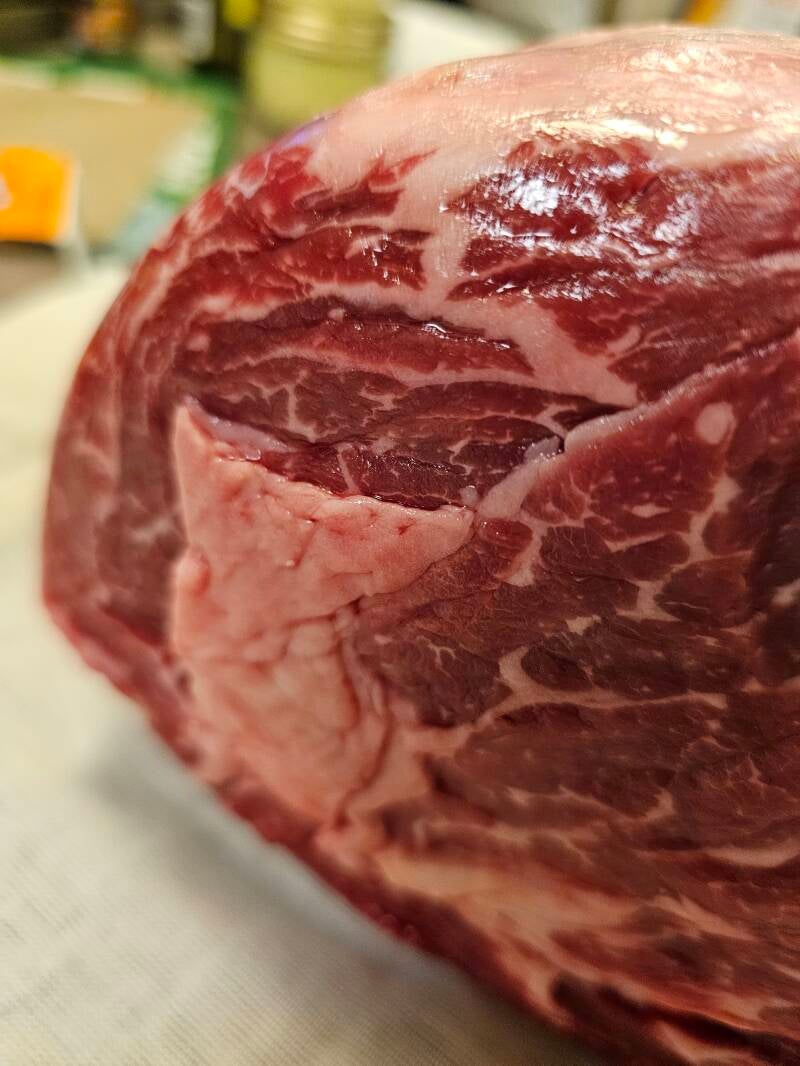
🧀 The Cheesecloth Trick
Here’s the method I use—simple, low‑stress, and perfect for busy holiday weeks:
- Start with a bone-in prime rib, ideally well-marbled.
- Pat it completely dry.
- Wrap it snugly in cheesecloth, which helps wick away moisture while still letting the meat breathe.
- Place it on a wire rack over a sheet pan so air can circulate.
- Tuck it into the coldest part of your fridge.
- Forget about it… but also check on it constantly because you’re emotionally invested now.
Every few days, I unwrap, rewrap, and admire it like a proud parent. The exterior darkens, the fat firms up, and the whole thing starts to look like it’s preparing for its big debut.
❄️ How Long to Age It?
For this year’s roast, I’m aging it for about 5–7 days—long enough to deepen the flavor without needing a culinary degree or a dedicated meat locker. If you’re feeling bold, you can go longer, but even a short dry age makes a noticeable difference.
🎄 The Christmas Payoff
On Christmas morning, while the kids are tearing into stockings and the cats are trying to steal ribbon, we’ll trim the dried outer layer, season the roast generously, and slow-roast it until it hits that perfect rosy medium-rare.
The aroma alone makes the whole week of fridge babysitting worth it.
And when we sit down to dinner—my husband carving, the teens pretending they’re not impressed, my mother-in-law asking how we made it so tender—I’ll get to say the most satisfying sentence of the season:
“Oh, this? We dry-aged it ourselves.”
Add comment
Comments